Blockchain Development Services in India
Smart contracts, dApps, tokens, exchanges and enterprise blockchain networks for Indian and global businesses.
OZRIT delivers blockchain development services from India for Web3 startups and enterprise teams. We build and security-review smart contracts, decentralised applications on Ethereum, Polygon, BNB Chain and Solana, and private Hyperledger networks for finance, supply chain and healthcare, all shipped by one India-based engineering team.
Hire Us17+
Years in software
Founded in Hyderabad in 2009
500+
Engineers
Full-time, not freelancers
3000+
Projects delivered
Across 35+ industries
98%
Client retention
Long-term partnerships
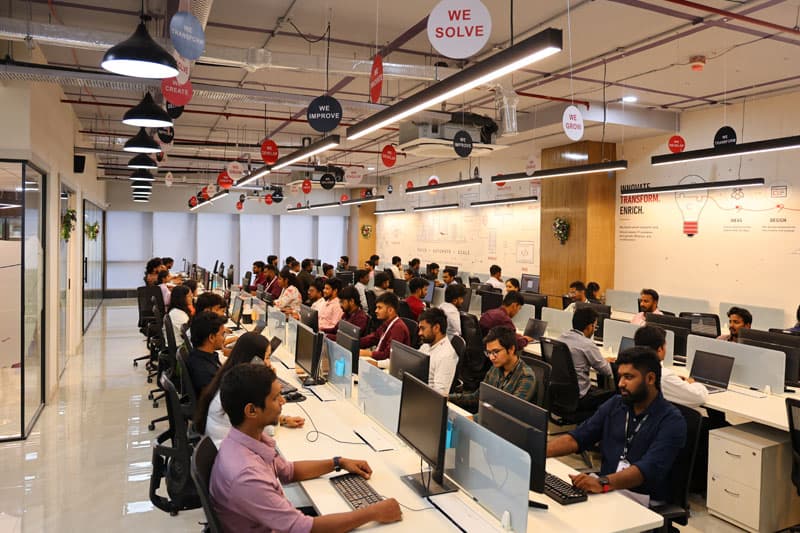
A Blockchain Development Company That Starts by Asking Whether You Need One
From smart contracts and consumer dApps to NFT marketplaces, exchanges and private enterprise networks, OZRIT delivers end to end blockchain development services in India that pair Web3 expertise with the engineering discipline your users, partners and auditors expect.
Blockchain is the right answer when several parties who do not fully trust each other need to share one record, or when value has to move without a middleman. It is the wrong answer for a lot of problems a normal database solves better and cheaper. We start every engagement with a short consulting phase that tests your idea against that line, so you do not pay to build a chain you did not need.
When it does fit, we choose the network for your use case, not for the hype: a public chain such as Ethereum, Polygon or Solana when you need open participation, Hyperledger Fabric when your partners need privacy and permissioned access. Contracts are written for gas efficiency, tested with Hardhat or Foundry, reviewed against the SWC registry, and prepared for an independent audit before mainnet.
Around the chain sits the product people actually use: wallets, dashboards, admin tools, APIs and mobile apps. You own the source code, and the same team can stay on for monitoring, upgrades and new features after launch.
What we build on-chain
Sixteen services across four areas. Pick one to see what's included.

The code that moves value, and the apps people use to reach it.
Smart contract development
Solidity and Rust contracts written for gas efficiency and tested with Hardhat or Foundry before anything reaches a testnet.
Smart contract review and audit prep
Line-by-line review of existing contracts against the SWC registry and OWASP guidance, with fixes and a hand-off to an external auditor.
dApp development
Web and mobile front ends wired to your contracts, with wallet connection, transaction states and indexers that read chain data quickly.
Chain-specific builds
Ethereum, Polygon, BNB Chain, Solana, Avalanche and TRON development, with the chain chosen for cost, finality and ecosystem.
How We Deliver Blockchain Projects
Six stages, from the question of whether you need a chain to a monitored mainnet launch.
Discovery and Use-Case Fit
We test whether blockchain fits your problem, who the participants are, and what a first release should prove.
Architecture and Chain Selection
We choose the network, token model, on-chain and off-chain split, and wallet and key-management approach.
Proof of Concept
A small working version on a testnet puts the riskiest assumption in front of real users before the full build.
Build and Test
Contracts, front end and back end are built in sprints, with unit, fuzz and integration tests on every release.
Security Review and Audit
Internal review, static analysis and preparation for an independent audit, with fixes verified before mainnet.
Deployment and Support
Mainnet launch, monitoring, upgrade paths and ongoing support as the network and your users grow.
Where blockchain pays off
Blockchain earns its cost where several parties need to trust one shared record. These are the places we see that most often.
Check if it fits your ideaFintech and payments
Cross-border settlement, tokenised assets and programmable payments, with KYC and AML checks built into the flow.
Supply chain and logistics
A shared, tamper-evident record of every hand-off, so partners stop reconciling shipment data by email and spreadsheet.
Healthcare
Consent-based record sharing between providers, drug traceability and audit trails that regulators can inspect.
Real estate
Land-record verification, fractional ownership and escrow contracts that release funds when conditions are met.
Insurance
Parametric policies where a verified event triggers the payout automatically, with no claim form to chase.
Retail and loyalty
Tokenised rewards that work across brands, and product authentication that customers can check themselves.
Compliance Built In,
Not Bolted On
Regulatory requirements show up in architecture reviews, threat models, and rollout gates from sprint zero. Every system we ship is reviewed against the standards your industry, region, and customers actually live under, so production never surprises your auditors.
Industries we serve
We build with teams that already know your sector's rules, users and integrations, so you spend less time explaining your business and more time shipping.
Browse all industries- HealthcareDigital health and clinical systems
- FinancialFintech, banking and investment
- Food & HospitalityRestaurants, hotels and travel
- EducationEdTech, LMS and learning tools
- Information TechnologySaaS, cloud and enterprise software
- Retail & EcommerceStorefronts, POS and inventory
- Real EstatePropTech, listings and CRM
- LogisticsSupply chain and fleet tracking
OZRIT in the press
Our work and our team have been featured across leading technology and business publications.













Related services
Hire dedicated developers
Add Solidity and Web3 engineers to your team
Fintech app development
Payments, lending and banking apps
Custom software development
For the systems your chain connects to
SaaS development
Multi-tenant products with billing and security
Mobile app development
Wallets and dApps on iOS and Android
Web development services
Front ends for your dApp and dashboards
AI development services
Pair on-chain data with machine learning
How we work
Engagement models, timelines and rates
FAQ
Often not. Blockchain helps when several parties who do not fully trust each other need one shared, tamper-evident record, or when value must move without an intermediary. If one company controls the data, a normal database is usually faster and cheaper. We test your idea against that during a short consulting phase before any build starts.
We build on Ethereum, Polygon, Solana, BNB Chain, Avalanche and TRON for public networks, and on Hyperledger Fabric for private enterprise networks. Platform choice depends on transaction cost, finality, ecosystem and who needs to take part.
Choose a public chain when anyone should be able to verify or take part, for example tokens, marketplaces and open dApps. Choose a private or permissioned chain when only known partners should see and write data, for example supply chain consortia or healthcare record sharing. Some products use both.
Every smart contract is reviewed internally, tested with Foundry or Hardhat, and checked against the SWC registry and OWASP guidance. We prepare the code for an independent audit before mainnet and plan for incident response from day one. Contracts that hold real value should always get an external audit, and we recommend and coordinate one.
dApp front ends, token and NFT development, custodial and non-custodial wallets, crypto exchanges, DeFi and P2P lending platforms, token sale platforms, asset tokenization, private blockchains, enterprise integration and consulting.
Yes. We build ERC-20 and BEP-20 tokens, ERC-721 and ERC-1155 NFTs, and full NFT marketplaces with custom royalty logic and lazy minting, along with the payment ramps your market needs.
A consulting and proof-of-concept phase usually runs 2 to 4 weeks. Smart contract MVPs typically ship in 4 to 8 weeks. Full dApps with off-chain components, indexers and front ends run 8 to 16 weeks, and enterprise Hyperledger deployments take longer.
It depends on scope, chain and audit needs. A discovery sprint starts from $1,000 and ends with a fixed-scope or time-and-materials proposal, and hourly team rates are listed on our How We Work page. Independent audits are priced separately by the audit firm.
Yes. We review existing Solidity, Rust and Move contracts, flag issues by severity, and recommend or apply fixes before they reach production.
Both. Custodial wallets come with multi-currency support, KYC and 2FA. Non-custodial wallets use seed phrase or social recovery patterns, so users keep control of their keys.
Rules for virtual digital assets in India are changing, and obligations such as KYC, AML and registration with FIU-IND can apply to businesses that handle them. We build KYC, AML and reporting hooks into exchanges and wallets, but you should take legal advice on licensing and tax for your specific model.
Yes. Monthly retainers cover monitoring, network upgrades, contract migrations, gas optimisation and user onboarding, so the system stays healthy beyond launch.